

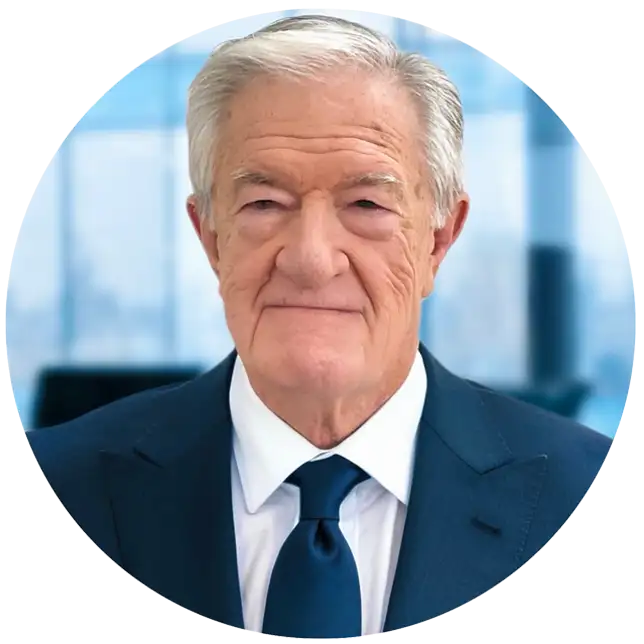


Dear Friends,
The kinetic wars of the past several years have sparked an urgent need for increased diplomacy and military defenses alike. We’re seeing both at play right now in Eastern Europe, where Washington is trying to advance ceasefire negotiations while developments on the physical battlefield might be the ultimate decider. We discuss this on our 3+1 podcast this week, and I suppose it’s not surprising that we’re witnessing record numbers on defense spending as the world watches political tensions erupt into kinetic attacks everywhere from the Middle East to the Caribbean. And while we’re also seeing innovative diplomatic tactics and side deals aplenty, the adage that the best defense is a strong offence has perhaps never been more apt.
Kind Regards,
Jack Devine
CIA Spymaster & Chairman, TAG Intel
Emerging World (Dis)Order
A potential ceasefire between Ukraine and Russia was back in the spotlight this week, with President Trump’s special advisors Jared Kushner and Steve Witkoff in Moscow to meet with the biggest obstacle to peace himself, Russian President Putin. The group held a five-hour meeting after which Moscow described the talks as productive but admitted no compromise was found. Territorial disputes remain the central deadlock here, which is perhaps unsurprising given that Russia’s three non-negotiable pillars are control of the Donbas region of Ukraine, limits on Ukraine’s military, and international recognition of seized territories.
Trump’s intervention has fundamentally shifted the negotiating dynamics, and NATO Chief Rutte has even praised Trump as the only person who could “break the deadlock,” but the Europeans are wary of being excluded from discussions that will impact their own security architecture. For the past four years of the Russia-Ukraine war, European nations have become increasingly subject to Russian sabotage attacks against everything from NATO critical infrastructure to supply chain logistics, and the Russians have been toying with drones at their borders.
So, when Putin simultaneously demands that Europe stop “obstructing” peace while threatening military confrontation if Europe “starts a war,” he’s embracing coercive diplomacy. This week, Putin explicitly stated Russia is prepared for military confrontation with Europe and suggested some American proposals are “more or less acceptable” while others “do not suit us.” Right now, Putin’s shopping for the best deal while maintaining maximum military pressure, betting that Western unity will fracture before Russian resolve does, particularly as Moscow is making some battlefield gains to strengthen its negotiating hand.
Ukraine’s position has subtly evolved, marred by recent corruption scandals, and Ukrainian President Zelenskyy now acknowledges not all territories must be retaken by force. But Ukrainian Foreign Minister Sybiha dismissed the recent Moscow talks as “wasting the world’s time” and Kyiv remains cautious to accept any peace that ratifies Russian territorial gains in a Minsk III-like fashion, a temporary freeze before the next invasion.
Four years into the battle, war fatigue is thick, but the Russians still have the numbers advantage. While the Ukrainians have become exceedingly adept at drone warfare and thankfully managed to hold the line to a great degree, Russia is slowly catching up, and Putin isn’t afraid to throw thousands of bodies at the problem. Meanwhile, the Europeans are unfreezing Russian assets to fund Ukrainian weapons purchases and French President Macron is trying to get China to pressure Russia into an agreement. As the pressure and discussions continue, there are a lot of offensive and defensive moves being made. But I’ll still be keeping an eye on the battlefield itself, where gains and thwarted initiatives might prove the ultimate deciding factor.
More on the current state of peace negotiations between Ukraine and Russia, including the implications of territorial concessions, the role of Europe in the conflict, and the influence of President Trump on this week’s 3+1 podcast.
Middle East in Flux
Iraq just held its sixth parliamentary election since Saddam’s fall in 2003, and if you’re expecting democratic renewal, lower your expectations. Prime Minister Mohammed Shia al-Sudani’s coalition won with just 46 seats out of 329—hardly a mandate. Now comes the real contest: months of backroom dealing to form a government, while the country runs on autopilot with a caretaker administration that can’t make major decisions.
For American investors eyeing Iraq’s energy sector, this creates a dilemma. The timing looked perfect just weeks ago. ExxonMobil, Chevron, and KBR all inked major deals in the run-up to the election, returning to Iraq after years of skepticism. Al-Sudani played this brilliantly, using energy contracts as currency to buy Washington’s favor while positioning himself as the technocrat who could finally deliver stability.
But here’s the catch: those deals were signed by a government that may not survive coalition negotiations. Al-Sudani faces stiff opposition within his own Shia coalition, particularly from Iran-aligned factions that resent his attempts to constrain their militias. If he doesn’t secure a second term, every agreement goes back to square one.
The fundamentals remain attractive. Iraq sits on massive reserves and produces over 4 million barrels per day as OPEC’s second-largest producer. However, the country desperately needs foreign capital and expertise to expand production and modernize infrastructure. Heavily dependent on oil revenues, Baghdad continues to struggle to balance its budget. Oil prices are hovering in the low $60’s per barrel range, far less than what’s needed to cover most of Baghdad’s planned expenditures.
But political risk cuts both ways. The Trump administration is squeezing Baghdad to disarm Iran-backed militias, recently sanctioning an Iraqi state company for the first time. Al-Sudani’s tightrope walk—courting Washington while managing Tehran’s proxies—gets harder by the day. The wrong outcome in government formation could mean more sanctions, more instability, and more reasons for oil majors to reconsider their exposure.
The play here requires patience and a strong stomach for political volatility. Iraq’s energy opportunities are real, but so are the risks of policy reversals, militia interference, and regulatory uncertainty. For investors banking on al-Sudani’s continuation, the next few months will determine whether those recent deals were strategic wins or premature bets on the wrong horse.
When governments shift, or coalition talks stall, our team provides intelligence on forward-looking scenarios so investors can protect positions. Explore our services.
Resource Security, Tech, and Competition
Demand for military expansion has reached unprecedented levels, reflecting a high-level of global geopolitical unrest mixed with an overt display of modern kinetic conflicts. In 2024, the 100 largest global arms producers reaching record-breaking revenues of $679bn—a 5.9% increase from 2023. And for the first time since 2018, all five of the world’s largest arms companies increased revenues.
The private sector boom sits atop ballooning public budgets and military spending has increasingly become both a political instrument and a diplomatic signal. The Trump administration is preparing a $1tn defense budget (vs. $895bn under Biden), and Washington’s modernization push —including talk of reviving nuclear weapons testing—aims to project strength in a long-term strategic competition with China.
China is spending more amid pressure over Taiwan and a growing US military footprint in Asia. European governments and NATO are also being pushed to step up, and Middle Eastern conflicts add further fuel. Israel’s defense establishment reported signing 21 government-to-government deals in 2024, alongside major investment in defense start-ups as demand surged for missile-defense systems and UAV technologies following Iran’s large-scale strikes. And despite sanctions, two of Russia’s major arms firms even saw 23% growth, with domestic demand compensating for lost export markets.
The bulk of the global revenue rise for arms companies came from the United States and Europe. Europe, excluding Russia, recorded 13% growth to $151bn, with 23 of the region’s 26 top-100 manufacturers posting revenue increases as states race to rearm. Still, capacity constraints loom, and dependence on critical minerals and fragile supply chains —exacerbated by China’s tightening export controls—could slow European expansion.Further, President Trump plans to resume nuclear weapons testing as the last US–Russia treaty expires in February 2026. If China and Russia modernize, Washington is likely to follow, risking a costly new nuclear race. US military spending is now 13 times larger than total global development aid and 750 times the UN’s regular budget—raising long-term questions about how to balance security investments with domestic welfare and fiscal stability.
We help organizations understand how cartel dynamics intersect with political risk, and give clients real-time insight into escalating unrest and government reactions. Explore our services.
Weekly Wildcard
While all eyes are on the conflicting accounts of the US boat strikes in the Caribbean, Honduras is simultaneously facing one of its most chaotic presidential elections in recent memory, and there are implications here for Washington’s regional influence. The elections were held on November 30, but the vote counting system has had at least two technical failures and as the count slowly advances, the margins between the two contenders are swinging back and forth on a knife’s edge.
In a country with a long history of contested outcomes, the future of democracy currently hangs in balance. At present, centrist candidate Salvador Nasralla trails right-wing candidate Nasry Asfura by a razor thin margin, but the final results are far from certain.
Layered on top of the contentious domestic election is the impact of the direct intervention from Washington. President Trump has openly endorsed Asfura, called Nasralla a “borderline communist,” and warned that there would be “hell to pay” if Asfura was defeated. President Trump’s recent pardon of former Honduran President Juan Orlando Hernández, a onetime US ally turned convicted drug trafficker, until recently serving a 45-year sentence in the United States, is also likely an attempt to galvanize the right-wing electorate in Honduras and boost Asfura’s chances.
As the vote count advances, the immediate concern is the threat of violence once the winner is finally announced. Already, allegations of fraud are flying. Tallying delays have forced authorities to barricade counting centers and both candidates insist they’re on track to win—they are only separated by a few thousand votes. Regardless of the outcome, a peaceful transition now appears remote, and the resilience of Honduras’s democratic processes will be challenged along with the count.
Our team translates fast-moving, imperfect information into strategic assessments that help clients adjust positions with confidence. Explore our areas of specialization.